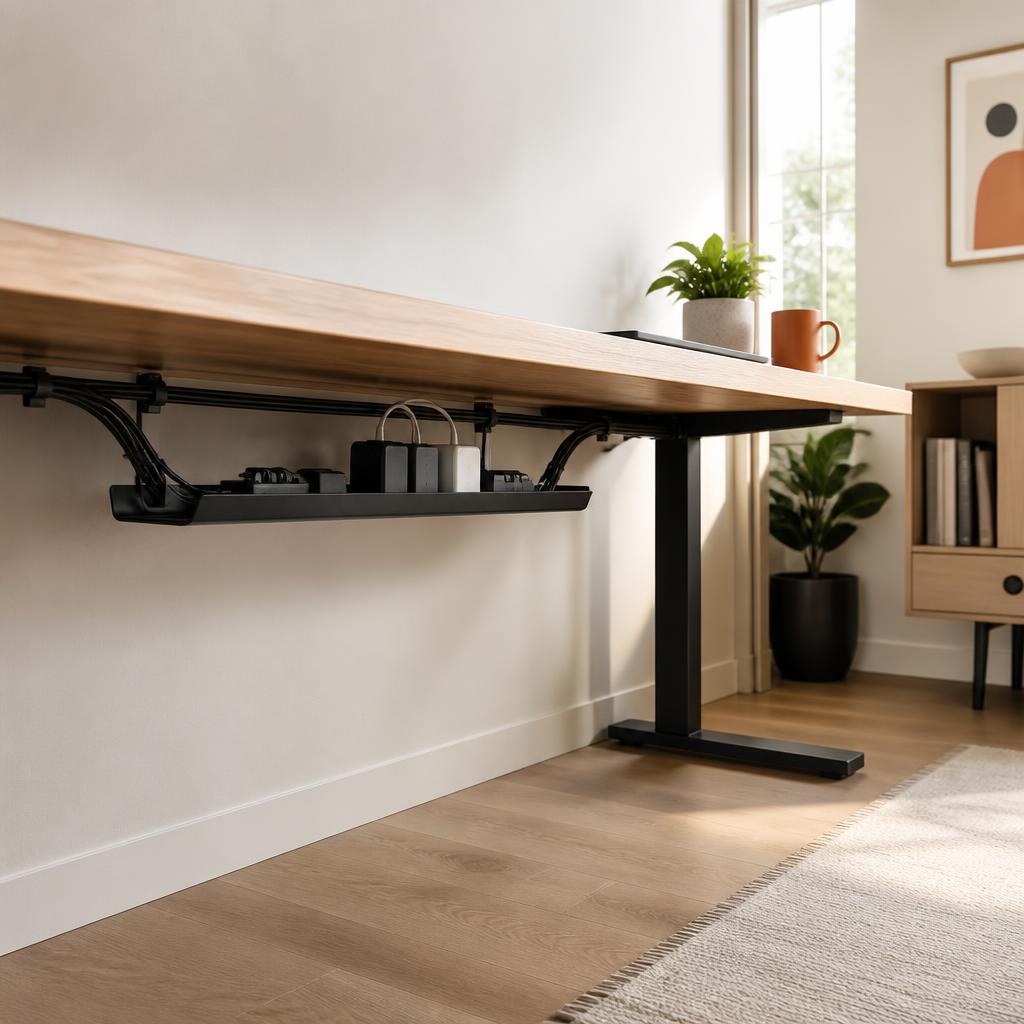
Cable management has not appeared in a Deskbound roundup in three weeks, which is strange given it is the problem people actually look at every day. This week is all six picks from that one category, rotating hard away from the work-from-home gear that took most of last week’s list. Prices move around, so check the current one on the product page before buying.
1. Yecaye No Drill Under Desk Cable Management Tray
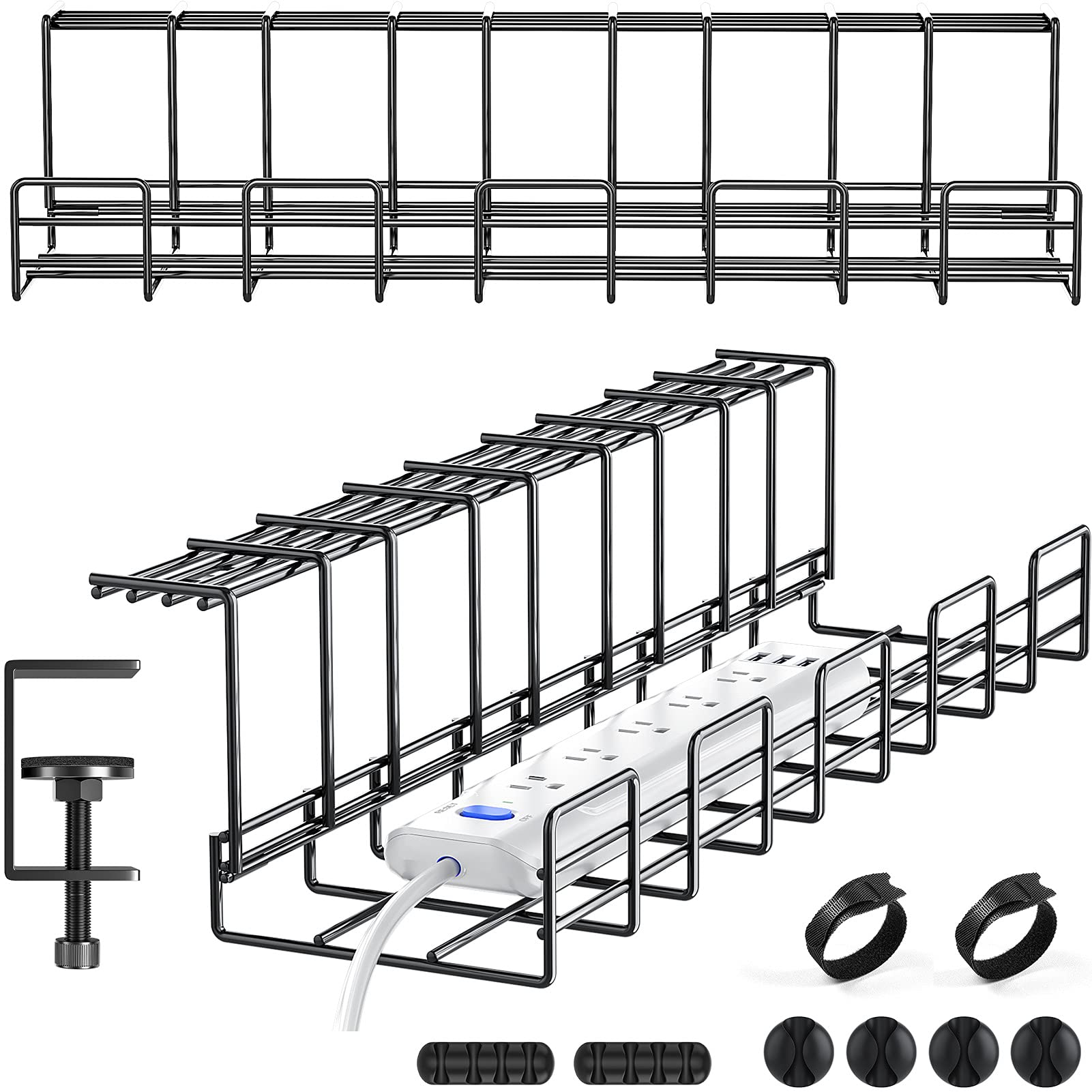
Every under-desk cleanup stalls at the same place: you have a power strip, a dock and three bricks sitting on the floor, and nowhere to put them that does not involve drilling into a desk you may not own. This is a pair of steel baskets that clamp onto the desk edge and hold all of it off the floor, so the vacuum goes under and the cables stop collecting dust.
Each basket is 15.7 inches wide by 4 inches deep by 4 inches tall and the clamps fit desks 0.4 to 2.3 inches thick, with a 10 lb rating per tray. The kit is two baskets, four clamps and a handful of cable ties. The clamp is the thing to check before you buy: it needs a flat, accessible desk edge, so a desk with a deep apron, a rounded lip or a frame that runs flush to the edge will not take it. A 15.7 inch basket also fills up faster than you expect once a wide surge protector and two wall warts are in there.
What you gain: The floor under your desk becomes empty floor again, and stays that way when you move the desk.
Yecaye No Drill Under Desk Cable Management Tray on Amazon
2. Yecaye 94in Cable Management J Channel Raceway
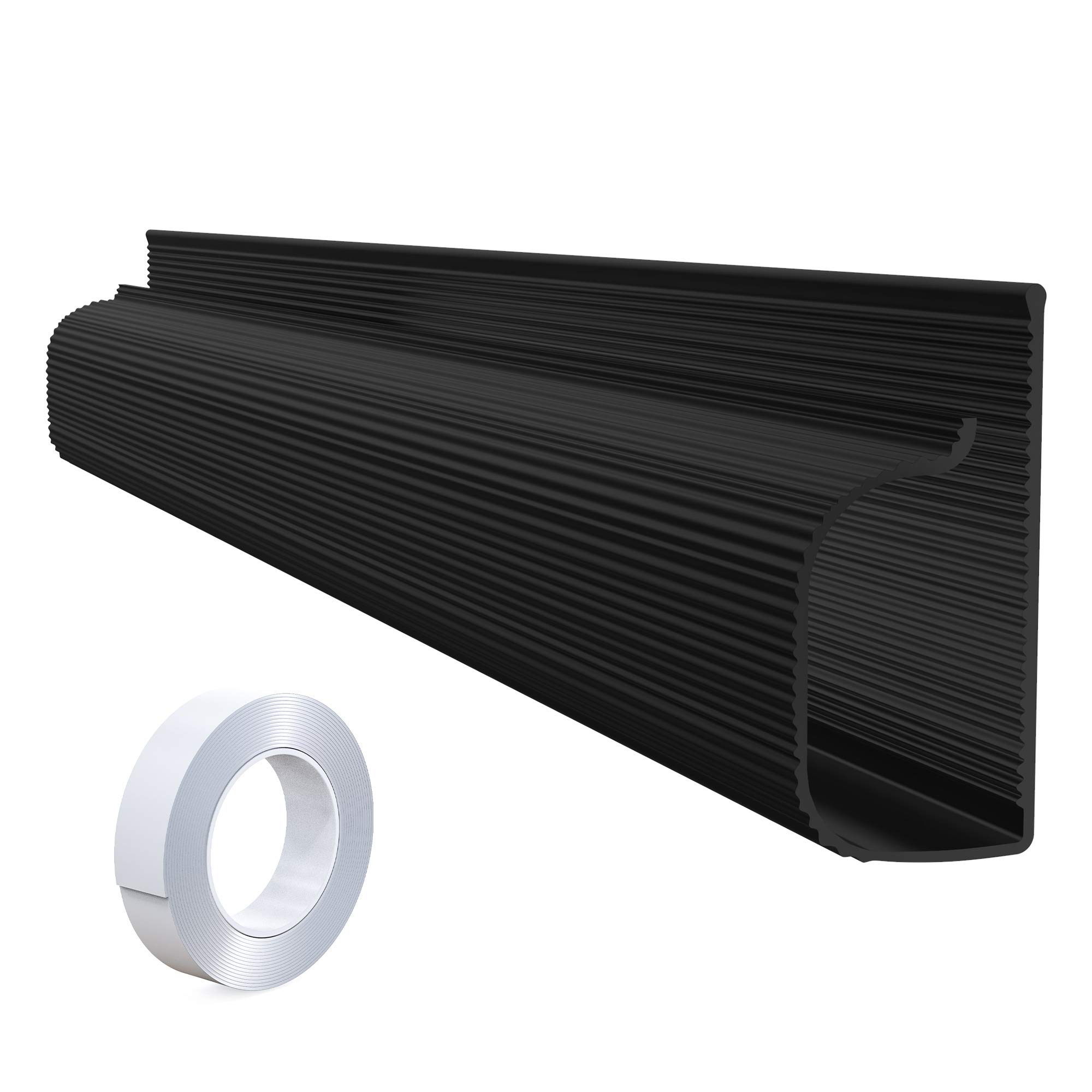
The tray handles the bricks, but the cables still have to travel from the back of the desk to wherever they plug in, and that run is what you see from across the room. This is 94 inches of open-topped channel that sticks to the underside or back edge of the desk and swallows that run.
It arrives as six 15.7 inch sections with a 1.1 by 2.5 inch channel, rated for up to 10 power cords or 16 Cat-5 cables, and mounts with 196 inches of adhesive PE tape rather than screws. Two honest limits. The J shape is deliberately non-locking so you can drop a cable in one-handed later, which also means an overfilled channel will shed cables when you bump it. And the adhesive is the whole mounting system, so on a dusty, waxed or recently painted surface it will let go in a few months. Wipe the surface with alcohol first and press it for a full minute.
What you gain: The cable run between desk and wall stops being visible from the doorway.
Yecaye 94in Cable Management J Channel Raceway on Amazon
3. Bluelounge CableBox

A power strip is the ugliest object in most home offices and the hardest to hide, because it has to stay reachable. The CableBox is a closed plastic shell that the strip lives inside, with openings at both ends so the cords come out tidy and the tangle stays out of sight.
Exterior is roughly 16 inches long by 6.25 wide by 5.25 tall, built from high-density flame-retardant plastic, and it takes surge protectors up to 15 by 5.25 by 2.5 inches. That interior dimension is the number that decides whether this works for you, so measure your strip before ordering, since plenty of 12-outlet strips are longer than 15 inches. Worth being clear about what it does not do: it hides the strip, it does not reduce the number of cables, and at 16 inches long it is a sizeable object in its own right. It wants to sit behind a desk leg or under the desk, not on open floor where you have traded a messy strip for a large white box.
What you gain: The power strip stops being the first thing your eye lands on under the desk.
4. UT Wire Cable Station
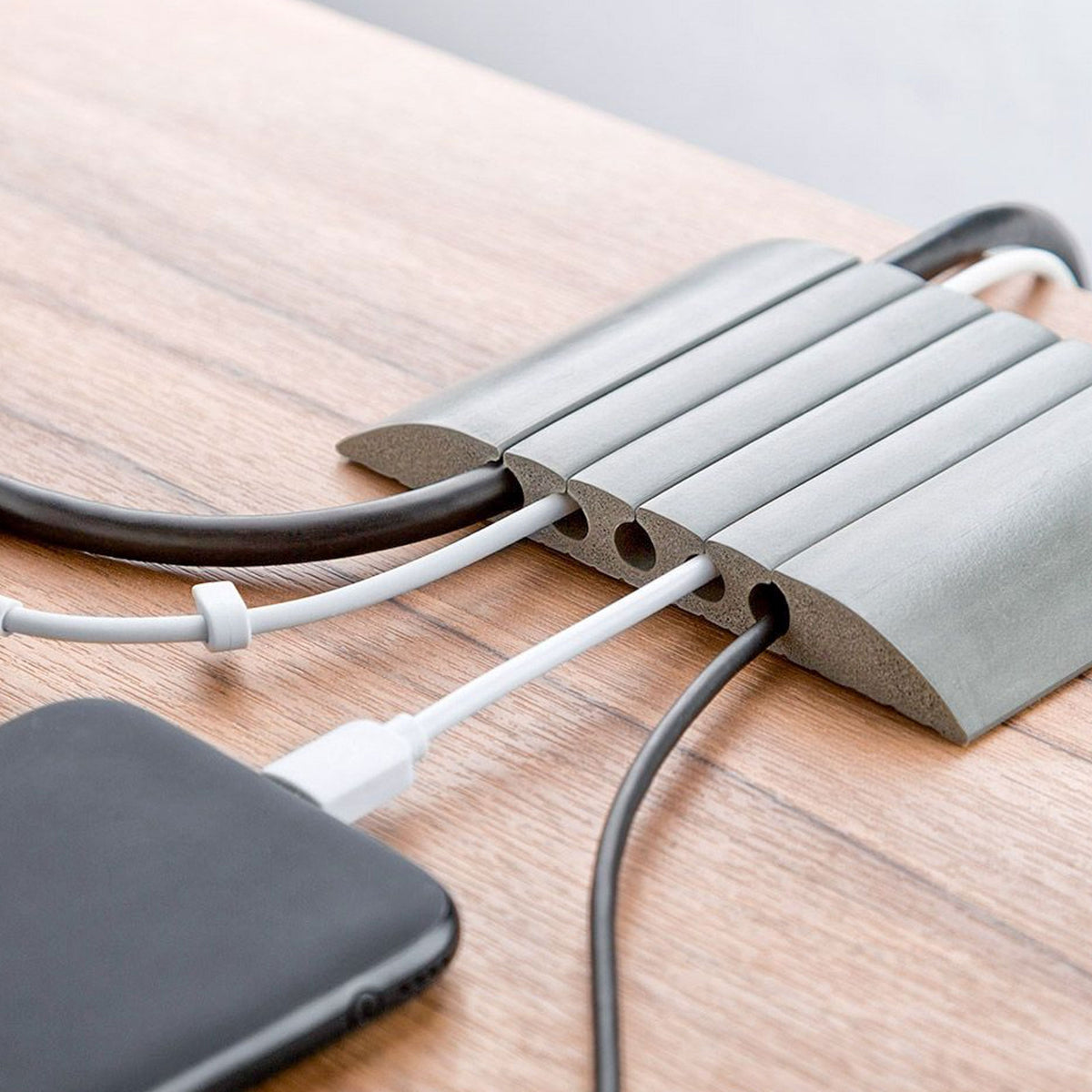
The cables you actually touch are the problem this solves: the phone charger and the spare USB-C that slide off the back of the desk the moment you unplug them, so every morning starts with fishing behind the desk. This is a small weighted rubber block with slots that grip the cable ends and hold them at the desk edge.
It is 4 inches long by 2.75 wide by 0.48 tall with five slots, each sized for roughly one HDMI or Ethernet cable, in rubber with double-sided tape included. The rubber surface is writable, which is more useful than it sounds when three of your five cables are black USB-C. Two caveats. It is one cable per slot, so this is for cable ends at the edge, not for bundling a thick run. And it is a cheap item where cross-border shipping can cost more than the product, so it is worth adding to a larger order rather than buying alone.
What you gain: Unplugged cables stay where you left them instead of falling behind the desk.
UT Wire Cable Station on Amazon
5. D-Line Mini Raceway

The J channel handles the fat run under the desk. This handles the thin one that has to climb a wall, which is a different job: a single cable going up to a wall-mounted monitor or down a painted wall to an outlet, where a chunky black channel would look worse than the cable did.
The profile is 1.18 inches wide by 0.59 tall with a half-round shape and a click-lock lid, self-adhesive, and the plastic is paintable so it can disappear into the wall colour. D-Line sells matching internal bends, external bends, flat bends, T pieces, connectors and endcaps, which is what separates a finished run from a strip of channel that stops in the middle of a wall. Two things to know. At 1.18 by 0.59 inches this is genuinely small, sized for one or two thin cables, so do not buy it expecting to hide a power run. And self-adhesive channel on painted drywall usually takes some paint with it when it comes off, which matters in a rental.
What you gain: A wall cable run that reads as trim rather than as cable.
6. VELCRO Brand ONE-WRAP Ties
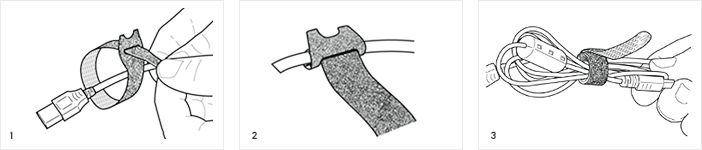
The cheapest fix on this list, and the one most people skip because it feels too obvious. These are pre-cut hook-and-loop straps with fastener on both faces, so the strap grips itself rather than needing a buckle, and a slotted head that stops it sliding loose once tightened.
They are adjustable and reusable, which is the practical difference from zip ties: every time you add a monitor or swap a dock you can open the bundle and redo it in seconds instead of cutting and replacing. The common size is 8 inches by half an inch, sold in packs. Honest caveat: a tie does not hide anything, it only makes a mess into a neater mess, so this is the thing you use alongside the tray and the channel rather than instead of them. And resist bundling power cables tightly with everything else, since a tight bundle traps the heat a charging brick’s cable gives off.
What you gain: Slack cable becomes one tidy run you can undo the next time the setup changes.
VELCRO Brand ONE-WRAP Ties on Amazon
A year from now the two that still matter are the clamp-on tray and the J channel, because they are the only ones that change where things live rather than how they look. The box, the ties and the raceway tidy what is already there, which is worth doing, but the tray is what gets the floor back.